











 Nutrition ·
 Intuitive Eating vs Proactive Snacking: How to Manage Hunger and Make Smarter Food Choices
·
Dr. Yoni Freedhoff ·
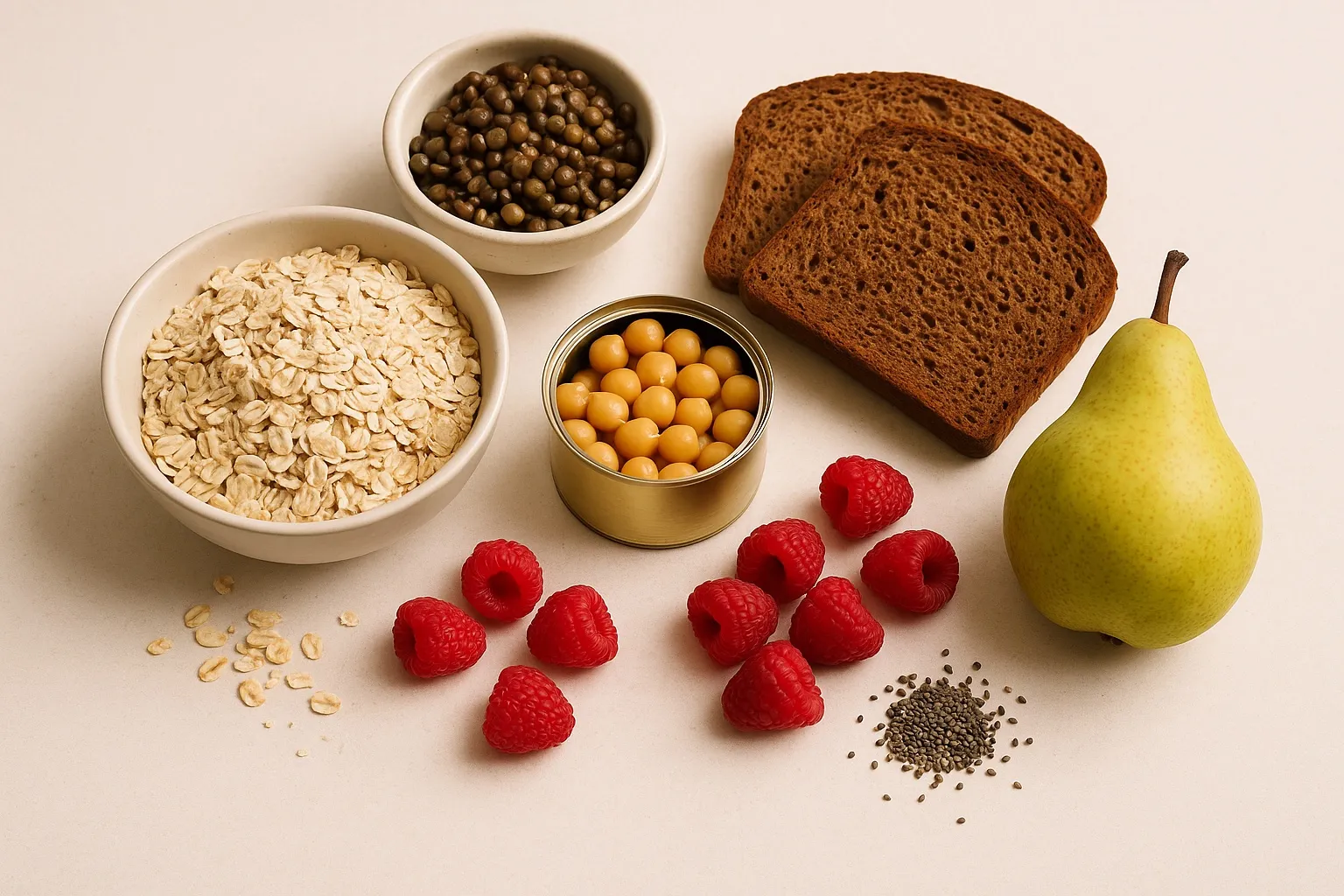
If you’ve noticed people on social media adding beans to everything, eating enormous bowls of oats and talking about getting 50, 70 or even 90 grams of fibre a day, you’ve come across fibremaxxing. Unlike a lot of viral nutrition trends, this one is built around something we actually have good reason to care about.
Most of us could eat more fibre. Fibre is important for bowel health, can help with cholesterol and blood sugar management, and is associated with a lower risk of several chronic diseases. But there is an important distinction between eating enough fibre and trying to eat as much fibre as possible. You don’t need to “max out” your fibre to benefit from it. In fact, pushing fibre up dramatically and quickly can leave you feeling pretty uncomfortable. So the honest answer is that the trend is worth taking seriously, as long as you drop the “maxxing” part.
Fibremaxxing isn’t a medical or nutrition term. It’s a social media trend centred on deliberately increasing fibre intake, often to very high levels. The foods it promotes are generally great for your health: beans and lentils, oats, whole grains, fruit, vegetables, nuts and seeds. The problem isn’t the idea of eating more fibre. It’s the idea that more and more must be better.
Because the evidence behind it is genuinely solid. Higher dietary fibre intake is associated with a lower risk of cardiovascular disease and several other chronic diseases, and a large body of research also supports benefits for cholesterol, bowel function and blood sugars. Those disease findings come from large population studies, so they show a strong and consistent association rather than proof that fibre alone is responsible. Notably, the biggest reductions in risk in that research show up around 25 to 29 grams of fibre a day, not at the extremes. There are also some very practical benefits.
Some types of fibre absorb water, form gels or slow digestion. Soluble fibre in particular slows how quickly your stomach empties and makes its contents thicker, which can help a meal feel more satisfying and make it easier to stay comfortably full between meals. Think about the difference between a breakfast that is mostly refined carbohydrate (pop tarts, Eggo’s, or my kryptonite, cinnamon toast crunch) and one that includes oats, fruit, nuts or seeds. You don’t need to count fibre grams to notice that some meals simply keep you going for longer. It’s also why fibre keeps coming up when we talk about managing hunger and fullness.
Fibre can help increase stool bulk and support regular bowel movements. But this is where individual differences really matter. Some people find that increasing fibre improves constipation. Others find that certain high-fibre foods make bloating and abdominal symptoms worse. There are different types of fibre, and your gut doesn’t necessarily respond to every type the same way.
This one is worth being honest about. When studies find that people who eat more fibre have lower rates of certain diseases, it doesn’t mean fibre is solely responsible. People who eat more fibre-rich foods often eat more whole grains, fruit, vegetables, legumes and nuts, and tend to have other differences in their diet and lifestyle that may be protective. That doesn’t make the evidence unimportant. It just means we shouldn’t turn fibre into the next “magic nutrient.”
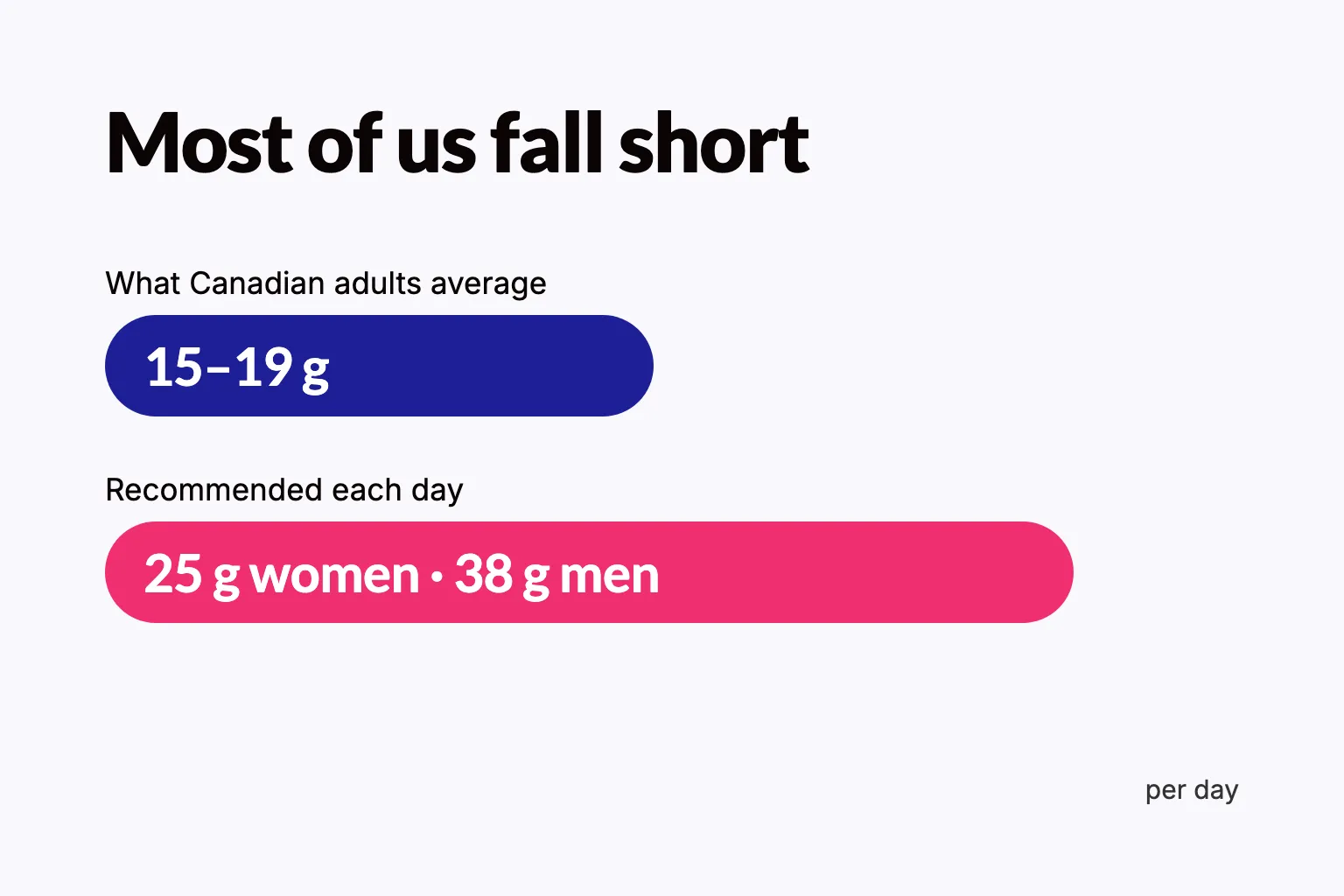
Less than TikTok thinks. You don’t need 70 grams of fibre a day because someone online eats that much. Health Canada recommends about 25 grams a day for women and 38 grams a day for men. Those targets come from the Dietary Reference Intakes, which work out to roughly 14 grams of fibre for every 1,000 calories, with slightly different figures for adults over 50 as caloric intake tends to naturally decline. Individual needs vary, so treat these as a guide, not a ceiling to fail at.
Here’s the gap the trend is responding to. Canadian adults average somewhere around 15 to 19 grams a day, so many of us are getting a bit more than half of what’s recommended. If you’re currently eating very little fibre, jumping straight from 15 grams to 50 grams isn’t a badge of honour. It’s likely to leave you feeling like a hot air balloon for a few days! The useful thing to remember is that any gradual increase can do you good. There isn’t a clearly established maximum healthy intake, but there’s also no good reason for most people to deliberately push their fibre extremely high.
Because some types are fermented by the bacteria in your gut, and that produces gas as the fibre is broken down. This is more likely if you increase your fibre quickly. Different fibres also behave differently:
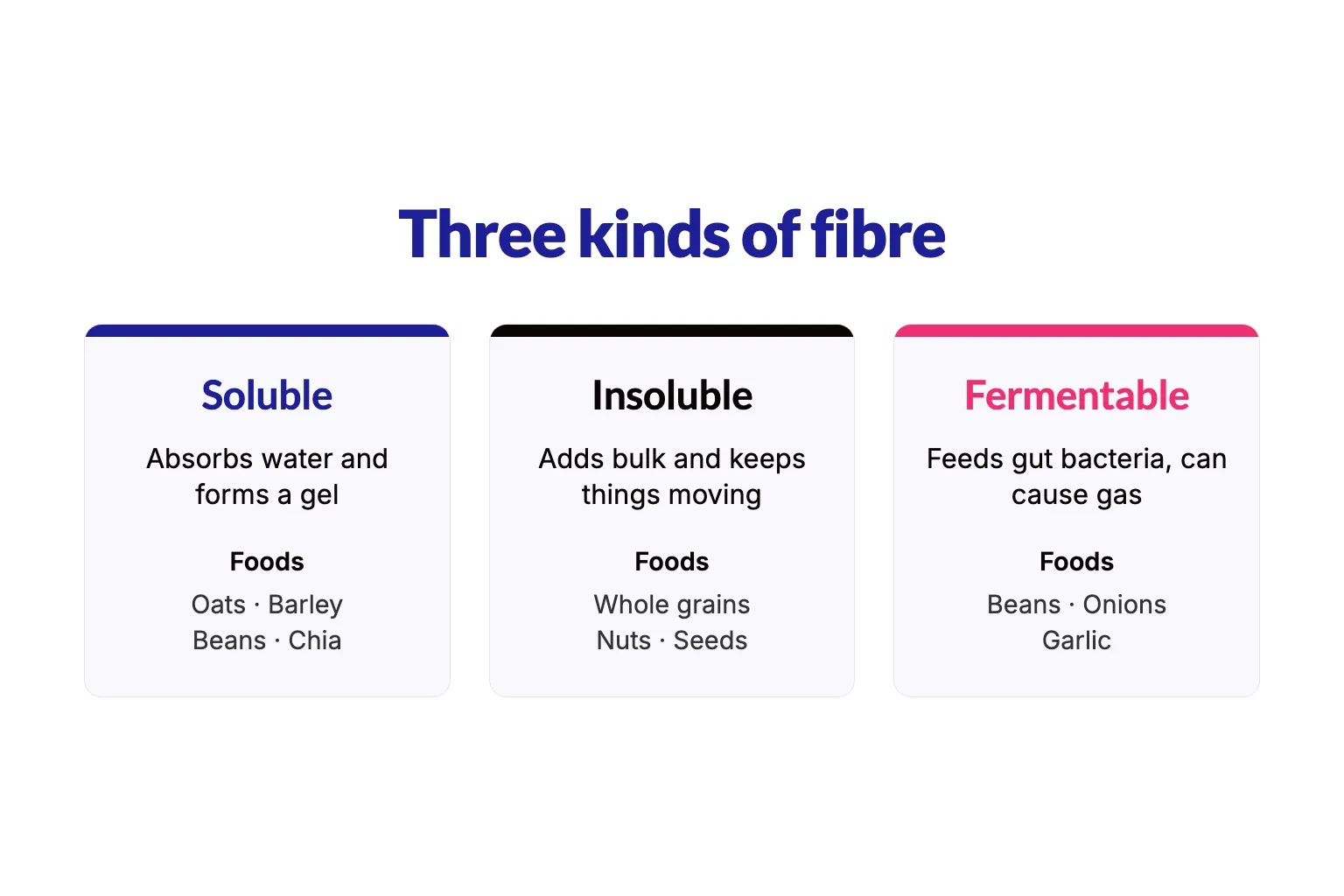
Most high-fibre foods contain a mix of types. So if fibre tends to make you bloated, the fix is usually to increase it gradually rather than to cut it out. If symptoms persist, the type and amount of fibre may be worth looking at.
Slowly, and with water. You don’t need to redesign your whole diet. Start with one or two small changes, increase your fluids as you go because fibre needs water to move through comfortably, and give your body time to adjust.
Try whole-grain bread instead of white, oats instead of a lower-fibre breakfast cereal, or brown rice or barley. You don’t have to swap every carbohydrate you eat. One change you actually keep doing beats a perfect plan you abandon next week.
No need for elaborate lentil bowls. Add black beans to tacos, chickpeas to a salad or soup, or lentils to a pasta sauce.
Frozen berries are an easy way to add fibre without adding another task to your day. Stir them into yogurt, oatmeal or a smoothie. Fresh and frozen are both great. The best option is whichever one you’ll actually eat.
For more on making small food changes that actually stick, the same principle applies well beyond fibre.
For most people, food is the best place to start, because fibre-rich foods bring vitamins, minerals and other beneficial compounds along with the fibre. But that doesn’t mean supplements are useless. Some have evidence for specific purposes. Psyllium can be useful for constipation and can help lower LDL cholesterol, where trials of around 10 grams a day found it lowered LDL by roughly 0.3 mmol/L. Fibre supplements aren’t inherently good or bad. The right choice depends on your goal and the type of fibre you need. If you’re considering one for constipation, ongoing gut symptoms, or because you take a medication that changes in fibre intake could affect, it’s worth talking to your healthcare provider about the most appropriate option for you.
Fibremaxxing has taken a genuinely useful message and pushed it to an extreme. Most of us could benefit from more fibre, but you don’t need to chase the biggest number possible. Focus on variety, whole-food sources and what works for your gut. Add fibre gradually, drink enough fluid, and look for simple ways to include more in the foods you already enjoy.
Eat more fibre. Eat a variety of it. And don’t worry about the maxxing.
How much fibre should I eat per day?
Health Canada recommends about 25 grams a day for women and 38 grams a day for men. That works out to roughly 14 grams of fibre for every 1,000 calories you eat, with slightly lower figures for adults over 50. Most Canadian adults currently get around 15 to 19 grams, so for many people the goal is simply a bit more, not a maximum.
Can too much fibre be bad for you?
More isn’t automatically better. The biggest health benefits in the research show up around 25 to 29 grams a day, and the very high intakes of 70 to 90 grams some trends promote aren’t necessary for most people. Increasing fibre too much or too fast, especially without enough fluid, can cause bloating, gas and cramping, and can make constipation worse rather than better.
Why does more fibre make me bloated and gassy?
Usually because it went up too quickly. Some fibres are fermented by your gut bacteria, which produces gas, and a sudden jump gives your system no time to adjust. Increasing fibre gradually and drinking more water alongside it usually settles the discomfort.
What are the easiest ways to get more fibre?
Small swaps beat big overhauls. Upgrade one carbohydrate (whole-grain bread or oats), add a can of rinsed beans or lentils to something you already eat, and keep frozen berries on hand for yogurt, oatmeal or smoothies. You don’t need to love vegetables to eat more fibre.
Should I use a fibre supplement?
Food first is the better bet for most people, because whole foods bring more than just fibre. That said, supplements have their place. Psyllium, for example, can help with constipation and can modestly lower LDL cholesterol. If you’re considering a supplement for a specific reason, it’s best sorted out with your dietitian or doctor rather than as a default.
How long until I notice a difference?
Fullness and digestion often shift within a week or two of eating more fibre consistently. If you increased it too fast and feel gassy, that usually eases as your gut adjusts over a few weeks, especially when you slow the pace and keep your fluids up.

Fran Wild is the lead dietitian at Constant Health, specializing in diabetes and weight management since 2013. As a Certified Diabetes Educator with experience in working with individuals who have undergone bariatric surgery, Fran understands that everyone's nutritional needs and preferences are unique. She advocates for a sustainable approach to weight management and believes that lasting weight loss can be achieved without sacrificing the joy of eating!
Follow onContinue reading