








 Mythbusting ·
 Nutritionist vs Dietitian in Canada: Understanding the Key Differences
·
Fran Wild ·
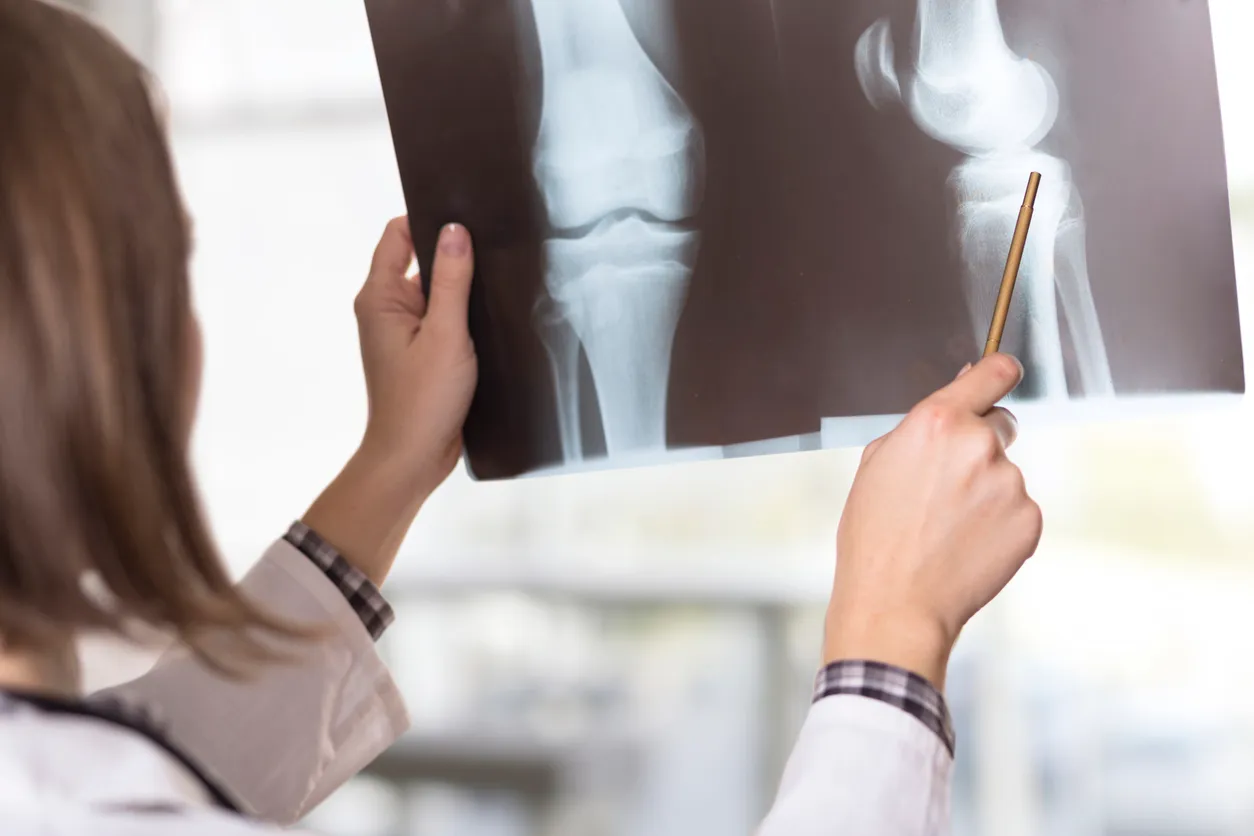
If you’re on a GLP-1 and you’ve read that it’s thinning your bones, here’s what the headline left out.
Yes, bone density falls. It falls because the weight is coming off, not because of the drug. That happens with any substantial weight loss, whether a medication or a diet takes it off, and no study has found that a GLP-1 leads to more bone density loss than the same weight loss by other means. Weight-loss-mediated bone density loss is generally more of a concern if you’re postmenopausal or already know your bone density is low, if you’re between the ages of 65 and 75 with type 2 diabetes, or if you’re losing a very large amount of weight. Regardless of age or health status, though, when it comes to bones and weight loss, the most useful thing you can do to minimize it is resistance training while you lose.
Yes, and the best trial we have puts a number on it. Researchers randomized 64 adults at increased fracture risk, mostly postmenopausal women with an average age of 63, to a year of semaglutide or placebo. Against placebo, hip bone density fell 2.59%, spine by 2.05%, and a marker of bone breakdown rose 54.8%, while the marker of bone building didn’t move.
That sounds alarming until you learn that losing weight without semaglutide does the exact same thing: reviews of weight-loss trials in older adults find that sustained, non-drug-assisted calorie restriction consistently lowers hip bone density. Why? Because bones are load-bearing tissue. Take the load off and they remodel to the lesser load they now carry.
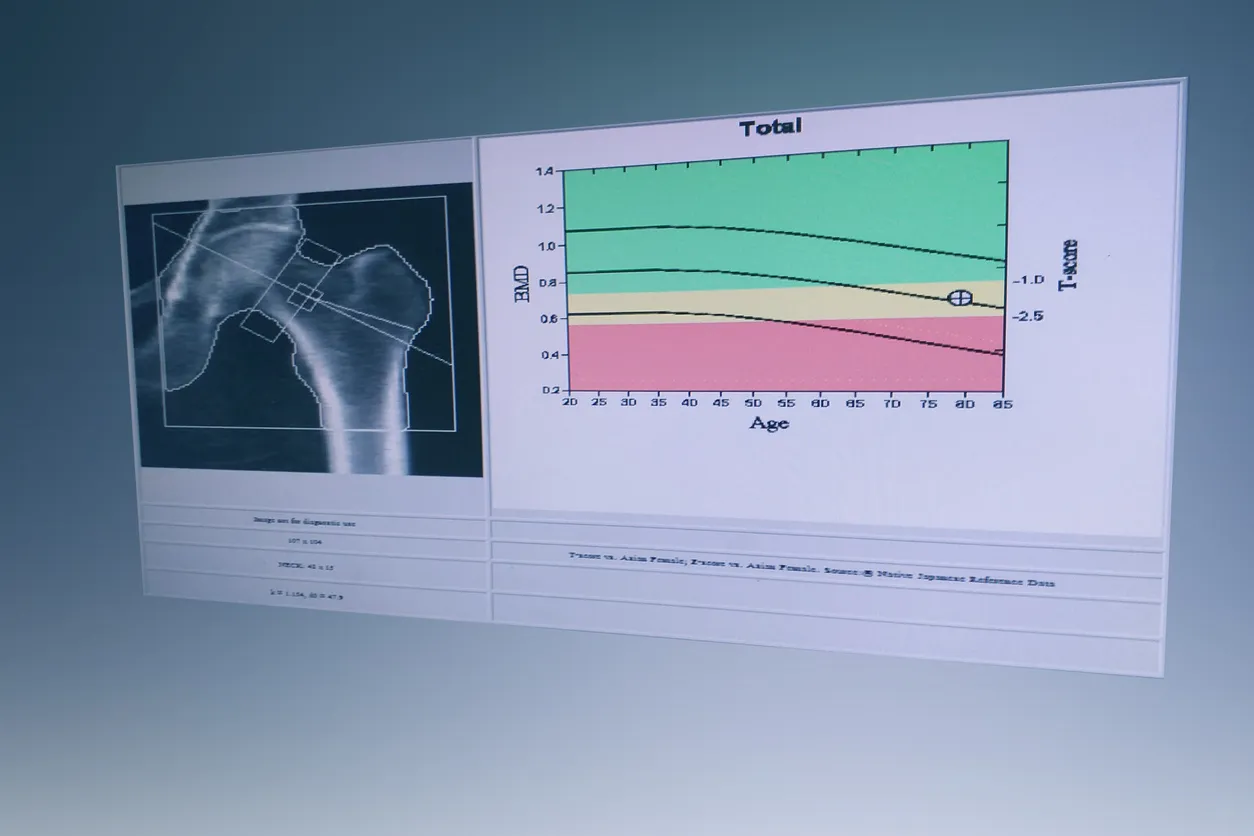
The evidence points at the weight, from three directions. In 255 people taking semaglutide or tirzepatide, bone loss tracked weight loss, and the authors concluded that the weight was driving it in the people without diabetes. In a trial with no GLP-1 in it at all, how much body mass came off was one of only two things predicting how much hip bone density went with it. And the researchers behind the semaglutide trial above call weight reduction the main effect on the skeleton. It holds from the other end too: in type 2 diabetes, where people lose far less weight, pooled trial data show bone density holding or rising. None of it changes what you should do, because the protective step is the same either way.
Three groups, and it’s worth knowing if you’re one of them.
Postmenopausal women and anyone who already knows their bone density is low. The semaglutide trial above deliberately recruited people at increased fracture risk, and that’s where a 2.59% drop matters most, because there’s less in reserve to spend.
Adults aged 65 to 75 with type 2 diabetes. This is the one finding that doesn’t fold neatly into everything above, so it’s worth walking through. In 46,177 adults aged 65 and older, starting a GLP-1 was associated with an 11% higher rate of fragility fracture than starting a different diabetes medication, and the signal sat almost entirely in the 65-to-75 band.
Three things temper this finding. Firstly, it’s observational, which means the people prescribed a GLP-1 may have differed from the people who weren’t in ways the study couldn’t measure, and the authors’ own analysis found that a fairly modest unmeasured difference would be enough to erase the association entirely. Secondly, it held against one comparison drug and not the other, which isn’t the pattern you’d expect from a straightforward drug effect. And finally, pooled results from 44 randomized trials in adults with type 2 diabetes point the other way, with fractures slightly less common on a GLP-1. Randomized trials are the better instrument here, because nobody chose who got the drug.
There’s also no obvious way the drug itself would weaken bone in this group and nowhere else, so if the signal is real, the likelier route is indirect. In older adults, anything that makes a fall more likely can turn into a fracture: the nausea and dehydration these medications can cause, muscle lost along with the weight, or a low blood sugar when a GLP-1 is added on top of insulin. That points less at the bone and more at staying steady on your feet.
Anyone losing a large amount of weight. Not because the drug does something extra, but because 50 pounds takes more load off a skeleton than five.
None of this is a reason to skip effective treatment. It’s a reason to discuss bone health with your clinician now rather than a year from now.

Resistance training, and the evidence for it is better than most people realize.
Start from why it should work at all. If bone is responding to the load it carries, then the way to protect it during weight loss is to keep giving it load, and lifting something heavy is the most direct way to do that. Walking and cycling are good for plenty of other things, but they ask relatively little of the hip and spine beyond what carrying your own body already asks.
That prediction has been tested. In a weight-loss trial in older adults with obesity, participants dieted and were assigned to different kinds of exercise, and the exercise groups each lost roughly 10% of their body weight over six months. The ones doing resistance training lost 0.7% of their hip bone density. The ones doing aerobic exercise lost 2.6%. Same weight off, and the lifters kept about four times as much of their hip bone.
That doesn’t make cardio the wrong choice. It’s good for your heart, your blood sugar and your head, and the best exercise is the one you’ll actually keep doing. It’s just that for bone specifically, aerobic exercise during weight loss comes out about the same as no exercise at all. The trial’s authors found its bone loss matched what dieting alone produces. Resistance training is the one that changes the number.
What makes that more than a fluke of one measurement is that the biology moved with it. The markers of bone breakdown climbed substantially in the aerobic group and barely at all in the lifters, which is the pattern you would expect if loading were genuinely protecting the skeleton rather than the numbers wobbling. A second study comparing the two found the same direction at the hip, though its design was weaker.
Two honest caveats. Every group still lost some bone, so this is reduction, not prevention. And the evidence is genuinely mixed: pooling nine weight-loss trials found exercise helped bone only at the femoral neck, with no clear winner between lifting and cardio. Those trials were mostly short and light, and their authors say so. The trial above is the one that held weight loss constant and measured the hip directly, which is why it carries the most weight here.
So the practical version. If you’re doing one thing for your bones while the weight comes off, make it resistance training, and the WHO’s two-or-more-days-a-week of muscle-strengthening work is a reasonable floor to build from. It’s also what Canada’s obesity guidelines recommend for preserving muscle and mobility in obesity management, which is the other thing worth protecting here, so the effort does double duty.
Then get the raw materials right, because bone that’s being asked to rebuild needs them. Osteoporosis Canada puts vitamin D at 600 IU a day for adults 70 and under and 800 IU above 70, counting food and supplements together rather than a pill on top of everything else. Calcium works the same way: 1000 mg a day for women 19 to 50 and men 19 to 70, 1200 mg for women 51 and up and men over 70, food first, supplements to fill the gap.
All of this is general guidance, and none of it is a prescription. What it means for you is a conversation for you to have with your clinician.
Losing weight costs you some bone density. That was true before these drugs existed, and it’s true of the person doing it with diet only in the next chair.
Your skeleton doesn’t know why the load went away. So give it a reason to stay strong while it does.
Do GLP-1 medications cause bone loss?
Bone density does fall while you lose substantial weight on a GLP-1. In a placebo-controlled trial of 64 adults at increased fracture risk, a year of semaglutide lowered hip bone density by 2.59% versus placebo, in a group that lost about 6.8 kg more than the placebo group. But that is what large weight loss does to a skeleton by any route, dieting included, and no study has found a GLP-1 leads to more bone density loss than the same weight loss by other means.
Is bone loss on a GLP-1 caused by the drug or by the weight loss?
The evidence points at the weight. In 255 people taking semaglutide or tirzepatide, how much bone they lost tracked how much weight they lost. In a separate trial with no GLP-1 in it, how much weight came off predicted how much hip bone density went with it. The researchers who ran the main semaglutide bone trial call weight reduction the main effect on the skeleton.
Does exercise protect your bones during weight loss?
Resistance training is the best-supported thing you can do. In a weight-loss trial in older adults, where the exercise groups each lost roughly 10% of their body weight, the group that lifted lost 0.7% of their hip bone density and the group that did cardio lost 2.6%. For bone specifically, aerobic exercise came out about the same as no exercise at all; it’s resistance training that changes the number. It isn’t complete protection, since every group still lost some bone, but it’s the one thing most worth doing.

Since 2004, Dr. Yoni Freedhoff, an Associate Professor of Family Medicine at the University of Ottawa, has dedicated his practice to obesity medicine. Canada's most outspoken obesity expert, Dr. Freedhoff is regularly sought out by the international media for commentary on nutrition and weight matters, and for his book, The Diet Fix: Why Diets Fail and How to Make Them Work. Dr. Freedhoff's diet agnostic philosophy and lessons learned from working with over 10,000 patients is the foundation of what Constant Health has been built upon.
Follow onContinue reading