










 Behaviour ·
 Best Ways to Lose Weight Sustainably
·
Dr. Yoni Freedhoff ·
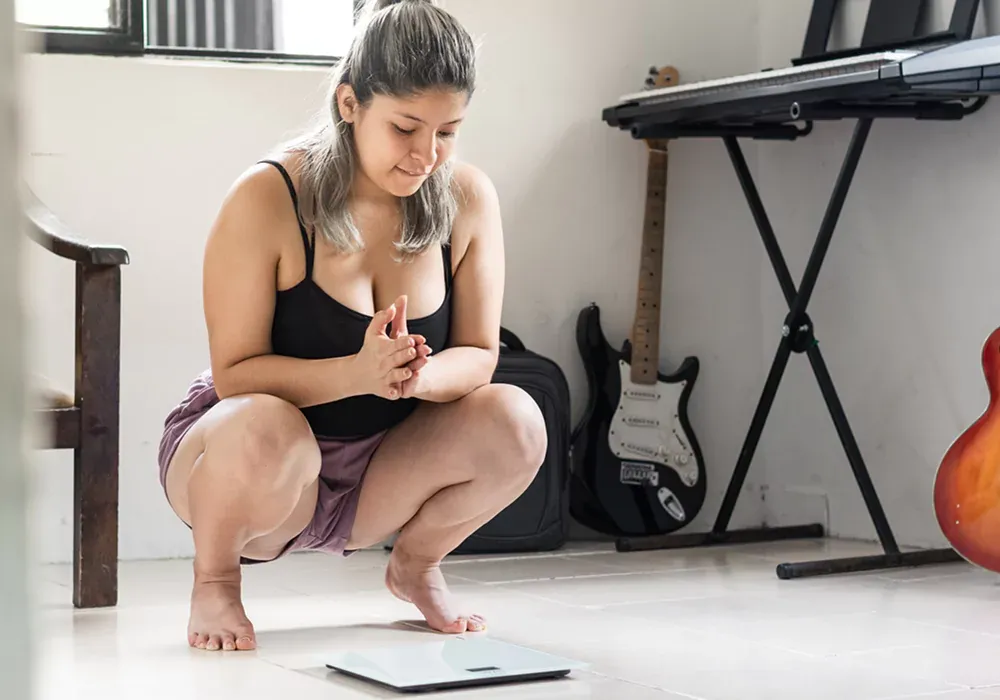
When you’re on a diet, how many times a day do you weigh yourself? And when things aren’t going well with your weight loss efforts, do you actively avoid stepping on your scale? While scales do measure the gravitational pull of the earth at a given moment in time, unfortunately they are somehow also thought to tell us how we’re doing, whether we’re healthy, and how hard we’re trying. So is there a right answer to how often you should weigh yourself? Should you weight yourself daily? Or is weighing yourself frequently a risky endeavour? As with most things, the answer is that it depends.
It’s difficult to say when our obsessions with scales and weight began, but no doubt the last century at least has seen us caring a great deal about their measurements. Where perhaps once scales were only found in our doctors’ offices or coin operated scales outside supermarkets (yes, they really had those), today scales are extremely inexpensive and have evolved to communicate directly with our smartphones and to also measure, albeit without great accuracy, our body fat percentages.
While there are definitely studies suggesting weighing yourself daily is useful for weight loss, the studies looking at same aren’t as clear cut as the world wants you to believe and are almost entirely observational (rather than randomized).
A randomized controlled study that managed to isolate daily weighing as an intervention that looked at 183 adults who were all given ineffective dietary advice (meaning if they lost weight it would be attributable to their daily scale use as they weren’t given good weight loss advice) found that weighing daily had no impact on weight loss.
And those studies that do note greater losses from those who weight themselves daily? Perhaps they’re simply discovering that those who are more successfully losing weight are more likely to want to see that reinforced by greater scale use and where people who know things aren’t going so well, avoid the scale for fear of reinforcing their disappointment and frustration.
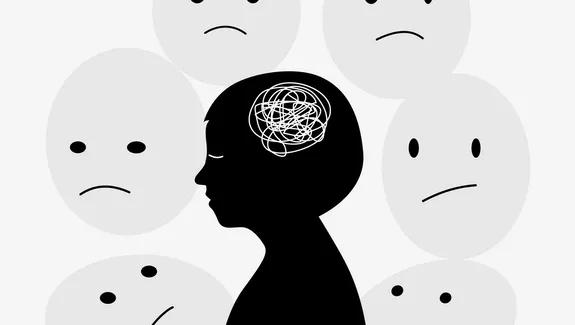
The challenge with scales is tied to the erroneous belief that they measure health, happiness, success, effort, and/or self-worth. And so for many traumatic dieters, stepping on them can lead to a cascade of negative emotions which in turn can derail a person’s best efforts, or alternatively, lead to highly restrictive and maladaptive thinking around food and weight.
An additional challenge is that scales can fluctuate quick a bit from day to day consequent to water retention in response to saltier foods or periods and due to constipation and clothing. While intellectually many people appreciate the existence of these fluctuations, for many, emotionally, they hit hard.

We’re all individuals. If weighing yourself frequently is something you find to be helpful and healthful, by all means, go for it. But for those who struggle emotionally with the numbers, finding a less frequent weighing routine might be wise. Again, worth reinforcing clearly here - scales don’t measure the presence of absence of health and if you’re meeting the goal of living the healthiest life you can honestly enjoy please don’t feel the need to weigh yourself at all.
What does science say about daily weigh-ins?
The science doesn’t say as much as anyone would like as the bulk of the science around weighing daily are observational studies which in turn might simply be finding that people losing weight like to see that on the scale while people not losing or gaining avoid them.
How can daily weighing affect my mental well-being?
Weighing daily risks a person being disappointed despite living the healthiest life that they can enjoy. There are thousands of genes and dozens of hormones involved in weight’s regulation. All we can and should expect of ourselves is our realistic and enjoyably best efforts
Why is a Wednesday morning weigh-in frequently recommended?
Wednesday mornings may buffer out some of our more indulgent weekend choices from influencing the scale.
How often should I ideally weigh myself for accurate tracking?
Weights vary daily. If you’re tracking yours, the trend is far more valuable than individual measurements. You can track trends with both frequent and infrequent weigh ins - there’ll just be more variability the more often you weigh

Since 2004, Dr. Yoni Freedhoff, an Associate Professor of Family Medicine at the University of Ottawa, has dedicated his practice to obesity medicine. Canada's most outspoken obesity expert, Dr. Freedhoff is regularly sought out by the international media for commentary on nutrition and weight matters, and for his book, The Diet Fix: Why Diets Fail and How to Make Them Work. Dr. Freedhoff's diet agnostic philosophy and lessons learned from working with over 10,000 patients is the foundation of what Constant Health has been built upon.
Follow onContinue reading
Behaviour ·  Behaviour ·
 Behaviour ·